The key idea
Rhinoplasty recovery runs at two speeds. The fast one: within one to two weeks most patients are back at work and socially presentable. The slow one: swelling at the tip can take up to 12 months to settle, which is why the result is judged at a year, not at a month.
- External splint for around 7 days; bruising most visible in the first 1–2 weeks.
- No nose blowing, no glasses resting on the bridge and no intense exercise in the early weeks.
- All timelines are a guide: every case is assessed individually at consultation.
The first 24–72 hours: splint, packing and sleeping upright
You will leave the operating theatre with a rigid external splint taped over the bridge, protecting the nasal bones while they begin to consolidate. Depending on what has been done inside the nose (septum, turbinates), Dr. Liuzza may also place thin internal silicone splints or light packing; these are used less and less nowadays and, when they are, they are usually removed within the first few days.
During these first hours it is normal to feel completely blocked, to notice pressure across the face, some light bleeding from the tip and the first bruises appearing under the eyes. Pain is usually moderate and well controlled with the prescribed painkillers; most patients describe discomfort and congestion rather than pain.
Three simple habits make a real difference in these days:
- Sleep with your head elevated (two pillows or a raised headboard) for at least the first week, so swelling drains sooner.
- Cold compresses on the cheeks and around the eyes — never directly on the splint — in short intervals during the first 48 hours.
- Relative rest: walking around the house is fine; bending over, lifting weight or anything that raises your blood pressure is not.
Bruising and swelling: how they evolve
Bruising around the eyes peaks between the second and third day and is most visible during the first and second week. It turns from purple to greenish to yellow before fading; in most patients it has all but gone by two to three weeks, though some take a little longer depending on the extent of bone work and how easily they bruise.
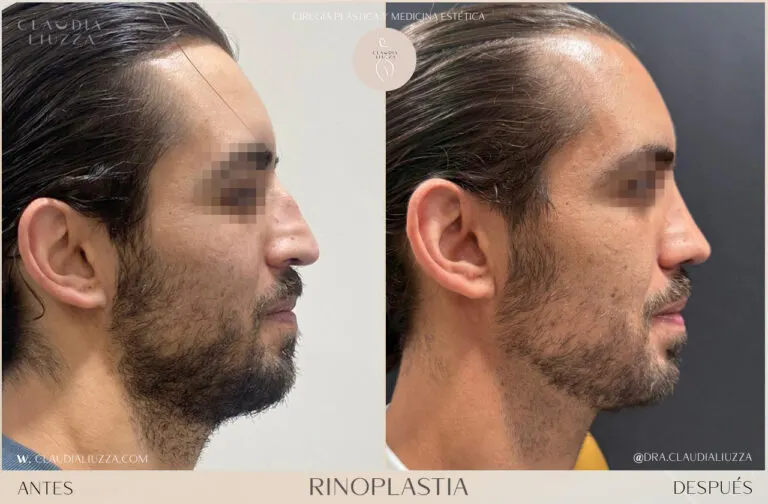
Swelling follows a different, longer calendar. When the splint comes off, the nose looks puffy and somewhat wider than it will be; that oedema drops quickly over the first month and progressively after that. The nasal tip is the slowest area: its skin is thicker and the tissue holds fluid for months, so it can keep refining for up to 12 months, and sometimes a little longer in thick skin or in revision cases.
One detail that surprises people: for many months the nose is more swollen in the morning and settles through the day. That is normal and does not mean something is wrong.
Recovery week by week
This timeline is a guide. It is there so you know what to expect, not so you measure yourself against a stopwatch: every nose, every technique and every patient moves at their own pace, and it is the surgeon who adjusts the timings at your follow-up visits.
- Days 1–3. Splint, congestion, bruising on the rise. Head elevated, cold compresses, prescribed painkillers and a soft diet if chewing is uncomfortable.
- Days 4–7. Bruises start changing colour and congestion eases. You can shower while protecting the splint. Saline nasal washes begin as instructed, to clear crusts and help you breathe.
- Day 7 (approx.). Follow-up visit: splint removal, plus external stitches if the approach was open. You will see a swollen nose; this is the starting point, not the result.
- Week 2. Back to work and social life for most patients. Make-up can cover any remaining bruising. Nasal breathing improves as internal swelling comes down.
- Weeks 3–4. You look "normal" to anyone who does not know you had surgery. Walks and light activity; still no intense exercise and no glasses resting on the bridge.
- Weeks 4–6. Gradual return to exercise, with medical clearance. In many cases glasses are allowed again.
- Months 2–3. Much of the swelling has gone. The bridge looks defined; the tip is still a little rounded.
- Month 3. Contact sports, with clearance.
- Months 6–12. Progressive refinement of the tip and the skin. At one year the result is assessed properly and, if appropriate, any touch-up is discussed.
What to avoid, and for how long
Most small setbacks after rhinoplasty come from everyday gestures that seem harmless. These are the ones that matter most:
- Do not blow your nose for the first 2–3 weeks. If you need to sneeze, do it with your mouth open so you do not build up pressure inside.
- Glasses: nothing resting on the bridge for around 4–6 weeks while the bones consolidate. If you depend on them, use contact lenses or tape the frames to your forehead until we give you the go-ahead.
- Sun: the skin of an operated nose pigments easily and heat increases swelling. High-factor protection and shade for at least the first 2–3 months.
- Intense exercise: nothing that pushes your heart rate or blood pressure up for 4–6 weeks. Walking is fine from the first days.
- Contact sports (football, martial arts, basketball): at least 3 months, because a knock can displace the bones.
- Smoking and alcohol: both delay healing and increase swelling; the further away, the better.
- Exaggerated expressions and touching the tip in the early weeks. It is not the time for aggressive facial treatments either.
About going back to work
Most patients return between the first and second week, once the splint is off. If your job is physical or customer-facing and you would rather not show any leftover bruising, plan on two full weeks. Forcing an early return never pays off.
Does anything change if the rhinoplasty is ultrasonic?
In ultrasonic or piezoelectric rhinoplasty, the bone work is done with instruments that vibrate at ultrasonic frequency and cut bone without damaging the surrounding soft tissue. Because no osteotomes and mallet are used, there is less trauma to vessels and mucosa, which is why many patients show less bruising and less swelling around the eyes in the first weeks.
It is worth being honest about what that means: it can make the first 7–14 days easier, but it does not shorten the slow part of recovery. The tip still takes months to settle, the splint is worn just the same and the same precautions apply. It is a real advantage in the acute phase, not a different recovery.
Scars: open versus closed approach
In closed rhinoplasty all the incisions sit inside the nostrils and there is no visible scar. Open rhinoplasty adds a small incision across the columella — the strip of skin between the nostrils — which gives a direct view of the tip cartilages and allows them to be shaped more precisely when the case calls for it.
That columellar scar is a few millimetres long, sits in an area nobody looks at head-on and, when well sutured, usually becomes almost imperceptible after a few months. During the first weeks it may look pink or feel slightly firm; that is a normal part of the process. The choice between open and closed depends on what needs doing in your nose, not on the scar, and is made during planning with Dr. Liuzza.
Warning signs: when to call
Rhinoplasty is a safe operation when performed in an accredited centre with close follow-up. Even so, some symptoms should not wait for the next scheduled visit:
- Heavy bleeding that does not stop with rest and head elevation within 15–20 minutes.
- Fever above 38 °C, or foul-smelling discharge.
- Pain that gets worse instead of better from the second or third day, or that does not respond to the prescribed painkillers.
- Swelling or redness that increases suddenly, especially on one side only.
- Vision problems, severe difficulty breathing or any knock to the nose.
When in doubt, message or call. We would much rather see you once too often than let a small issue become a bigger one.
The final result and revision rhinoplasty
The rule we repeat to every patient: the result of a rhinoplasty is judged at 12 months. Before that, what you see is a nose still evolving, with residual swelling that can hide the definition of the tip or make the bridge look wider. Making decisions — or worrying — at month two or three is almost always premature.
If, after that year, an asymmetry or irregularity remains that concerns you, a touch-up or a revision (secondary) rhinoplasty can be considered. It is a different operation: it works on scarred tissue, requires more planning and often cartilage grafts, and its recovery tends to be somewhat longer, particularly where tip swelling is concerned. That is why it should be approached with a specialist used to these cases and with clear expectations from the first consultation.
"Every nose recovers at its own pace; what matters is knowing what is normal and what is not"
At consultation, Dr. Liuzza explains which technique your case needs, what recovery you can realistically expect and how follow-up works during the first year.
Frequently asked questions
When is the rhinoplasty splint removed?
How long does bruising last after rhinoplasty?
When can I wear glasses again?
When will I see the final result?
Can I blow my nose after rhinoplasty?
Sources and references
- Rhinoplasty — MedlinePlus, U.S. National Library of Medicine
- Nose reshaping (rhinoplasty) — NHS
- Rhinoplasty recovery — American Society of Plastic Surgeons

This content is for information purposes only and does not replace an individual medical assessment. To find out whether this procedure is suitable for your case, consult a qualified specialist.