What is rhinoplasty?
Rhinoplasty is the surgery that modifies the shape and, in many cases, also the function of the nose. It is one of the most requested procedures and, technically, one of the most complex in facial plastic surgery: it demands millimetric precision and a highly trained three-dimensional vision.
When performed with sound judgement, it is not about "changing your face" but about harmonising it: small changes to the nose can balance the whole face without altering your identity.
Ultrasonic (piezoelectric) rhinoplasty
We use piezoelectric instruments that sculpt the nasal bone with micrometric precision, without the traditional controlled fractures. The result is a noticeably more comfortable and predictable recovery.
Types of rhinoplasty
Every nose is unique. Dr. Liuzza evaluates your case in detail and designs a surgical plan tailored to your anatomy and your goals.
Primary rhinoplasty
First nose surgery. The most common. It corrects the dorsum, the tip, the width of the nostrils or the projection.
Secondary rhinoplasty
Correction of unsatisfactory previous results. Technically more complex, it requires specialised experience.
Rhinoseptoplasty
Combines aesthetic changes with septum correction to improve breathing and appearance at the same time.
Ethnic rhinoplasty
Respects the characteristic features of each origin without standardising the result. Harmony that respects identity.
Real cases
A selection of results achieved by Dr. Liuzza. More cases available in consultation.
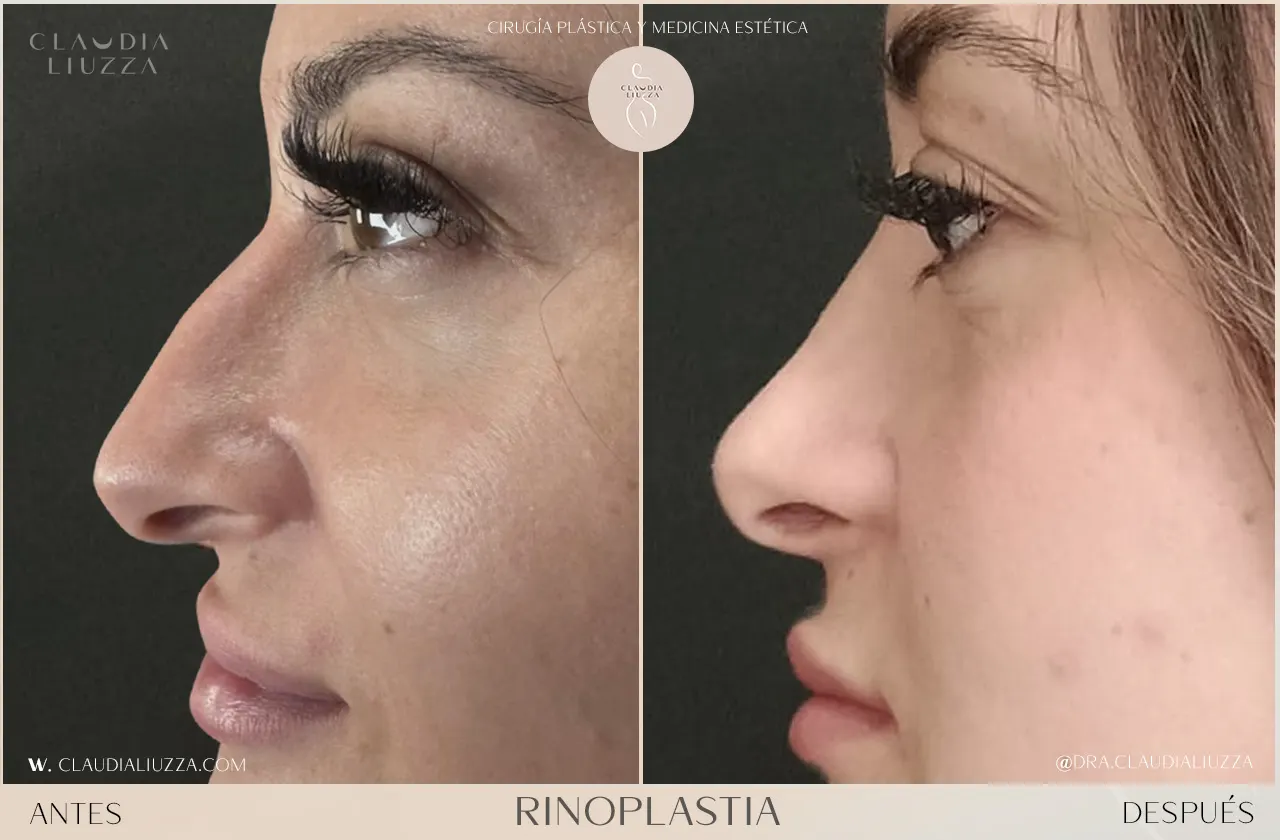 Case 1 · Primary rhinoplasty
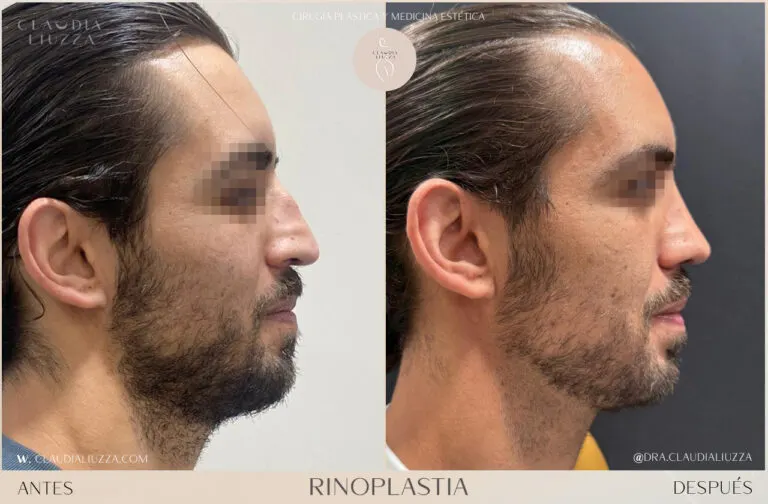 Case 2 · Ultrasonic rhinoplasty
Individual result; each case is assessed personally by Dr. Claudia Liuzza.
Postoperative course
A clear process, with no surprises. Here is the typical week-by-week course.
Rest and monitoring
Nasal splint in place. Mild swelling and periorbital bruising are to be expected. Discomfort is controlled with oral pain relief.
Splint removal
The nasal splint is removed. The nose already has its new shape, although still swollen. You can go out and about normally.
Active social life
Most patients return to on-site work and social life. Bruising has almost completely disappeared.
Shape already visible
Residual swelling at the nasal tip keeps going down. The result is already very noticeable and satisfying for most patients.
Final result
The definitive result becomes apparent between 6 and 12 months, once residual swelling has fully resolved.